Log entry Nº 792 · the stack watch
Bearing S 180° · November 13, 2026 · 3 min read
Advertising TechS 180°Watch log
IAG Media unifies five airlines and bets on targeted ads
IAG Media centralizes advertising across five airlines serving about 122 million passengers, while a Starlink rollout planned for 2026 creates new placements for buyers.
By James Calloway3 min read655 words
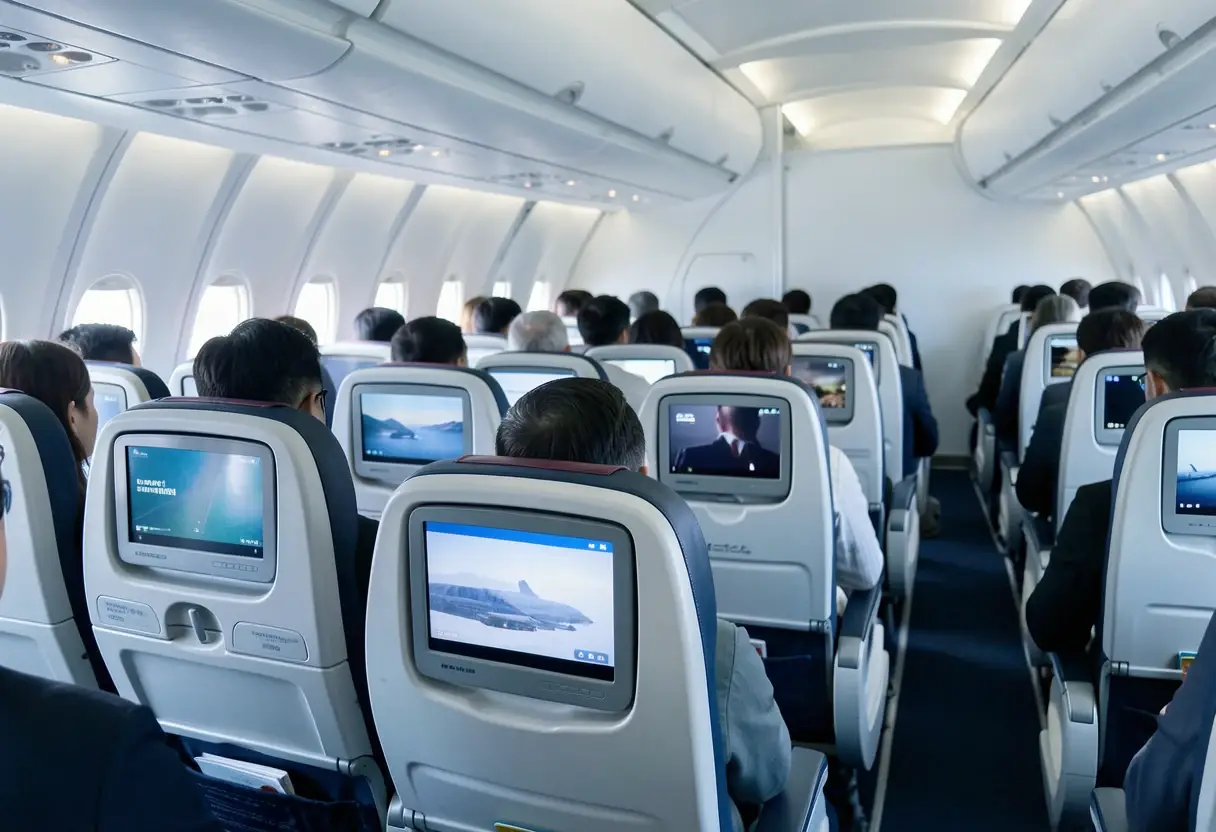
International Airlines Group (IAG), British Airways’ parent, plans to deploy Starlink on 50% of its long-haul fleet by the end of 2026, opening new advertising placements as it launches a unified ad business.
IAG Media will bring advertising across five IAG-owned airlines together for the first time:
- British Airways
- Aer Lingus
- Iberia
- Level
- Vueling
IAG served about 122 million passengers in 2025. That scale strengthens the pitch to advertisers, although the announcement gives no campaign pricing, audience definitions or performance benchmarks.
Josh Peckham, chief commercial officer of IAG Media, told ADWEEK: “We want to create one unified story of how IAG airlines are enhancing the passenger experience and our advertiser experience.” The statement ties advertising to the onboard experience, but it does not specify what either side gains in measurable terms.
What changes for advertisers?
IAG Media will become the single point of contact for advertisers across all five airlines. Until now, each airline has run a separate advertising strategy, Peckham said.
For agencies and brand buyers, that changes the route to market. Instead of navigating five airline-specific sales relationships, they can approach one business spanning British Airways and four other carriers. IAG does not say whether it will retain separate airline teams, whether inventory remains segmented, or whether buying one airline includes guarantees or access across the group.
That distinction matters. A unified sales contact does not automatically mean one commercial inventory, one audience or one delivery system. The announcement describes a consolidated proposition, but discloses no cross-airline audience segments, campaign minimums, rates, booking tools, reporting dashboards or attribution methods.
How does Starlink fit?
The announcement gives Starlink a measurable deadline: IAG aims to deploy it on 50% of the long-haul fleet by the end of 2026 and links the rollout to new ad placements.
It does not identify the placement formats. The company gives no date for the first ad-supported flight, no total aircraft count, no allocation among the five airlines and no details about campaign availability, pricing or measurement.
For media planners, those omissions block a proper inventory assessment. They still need placement locations, route targeting, eligible passenger journeys and confirmation of which onboard surfaces will carry the messages.
What will personalization look like?
IAG also hopes to make ads more personalized using travelers’ destinations and profiles. That could help advertisers aim relevant messages at different travelers, but the source does not define “profiles” or identify the underlying data.
The announcement leaves four practical controls unanswered:
- Which traveler and journey data will feed targeting?
- How will consent and opt-out work?
- How will sensitive attributes be handled?
- Will buyers receive audience-level data or only aggregated reporting?
These are disclosures, not allegations. IAG’s destination- and profile-based targeting ambition promises stronger relevance, while giving buyers little basis to judge data quality, frequency, reach, brand safety or conversion lift.
Can advertisers buy one network?
The group’s five-airline footprint and 122 million passengers suggest a broad proposition for advertisers. Yet “one unified story” should not be mistaken for a proven cross-airline campaign product. IAG has announced a sales structure and ambition; it has shown no case studies, pricing, audience benchmarks or results from unified campaigns.
There is also a timing gap. Starlink will reach only half of the long-haul fleet by the end of 2026 if IAG hits its target, so connected inventory cannot be assumed across the whole network at launch.
IAG Media’s clearest specified change is procedural: one contact for five airlines. Its larger claim is that consolidation, destination data and traveler profiles will make advertising better. The first claim has a clear structure; the second still needs formats, prices, controls and results.
One reporting caveat: the item carries the label “Beta Generated by AI, reviewed by ADWEEK newsroom.” The named executive quote and stated figures remain the usable basis, while operational promises deserve scrutiny until IAG publishes more detail.
Plot points
- IAG Media will unify advertising across five airlines for the first time.
- IAG served about 122 million passengers in 2025.
- Starlink is planned for 50% of IAG’s long-haul fleet by the end of 2026.
- IAG Media will become the single contact for advertisers across all five airlines.
- IAG hopes to personalize advertising using travelers’ destinations and profiles.
via adweek.com (Source)
More from James Calloway
Show full bio
Correspondent covering people, launches and day-to-day practice in marketing technology at Martech Beacon.
33 articles